Evidence
The proof layer.
The Diabetech archive combines third-party recognition, family testimonials, clinical/program materials, and operating-model documents.
2004 · third-party technical artifact
Scott Hanselman recognized GlucoMON publicly in 2004.
Scott Hanselman highlighted GlucoMON as long-range wireless delivery of blood sugar information for children with diabetes. The post is a contemporaneous proof artifact connecting Diabetech to software, wireless, and diabetes technology culture before modern mHealth existed.
“Great stuff happening from my buddy Kevin McMahon at DiabeTech with their GlucoMON.”
Open the Hanselman reference →
Device proof
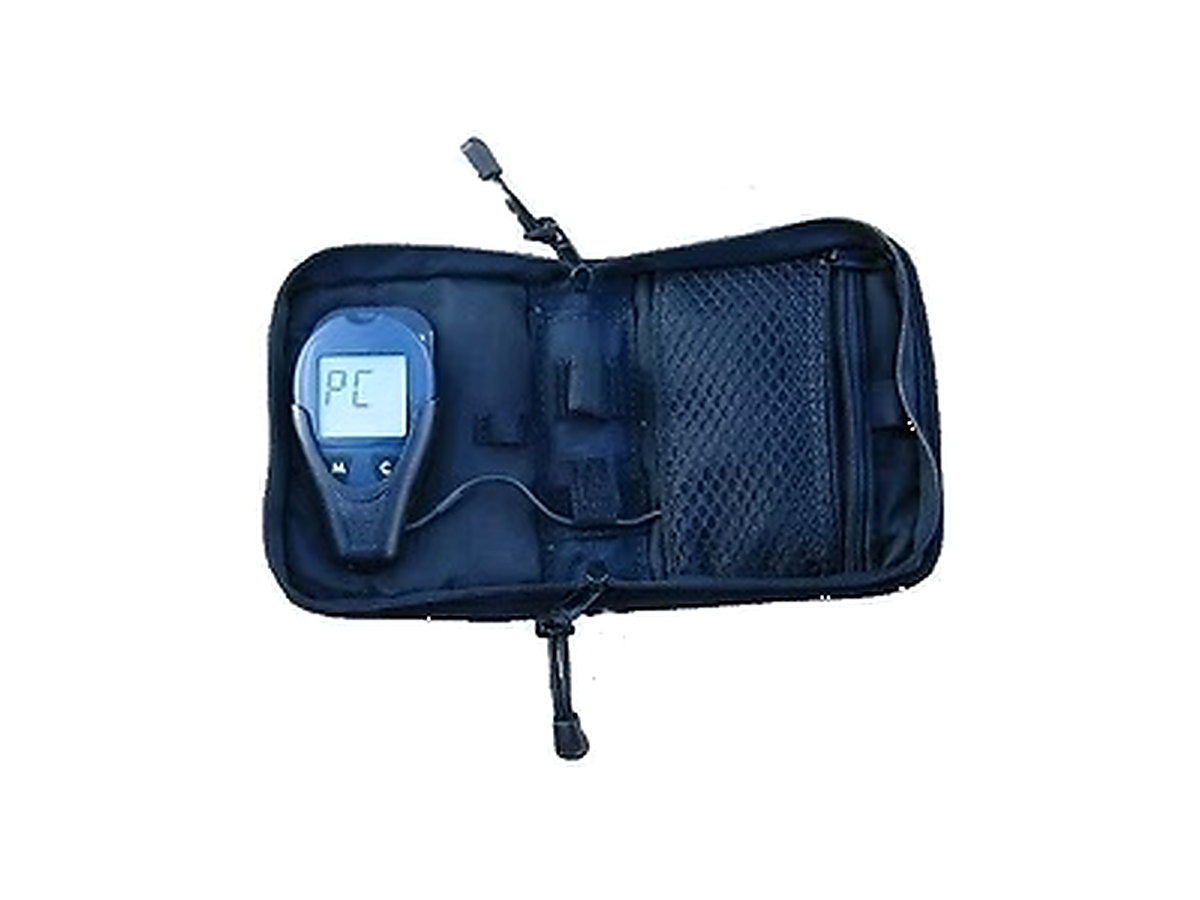
GlucoMON was designed for telemetry, not clicks.
Its job was to reduce reliance on user behavior: capture the reading, move the signal, and make the information available to someone who could act.
Alert proof
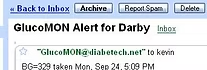
A glucose reading became a message.
The alert artifact shows the central idea in one image: the value was not a dashboard. The value was movement from device to awareness.
Family impact · permissions note in source archive
User experiences show the human value of remote awareness.
The User Experiences archive includes testimonials from families who used GlucoMON in school, travel, teen independence, caregiver coordination, and crisis-prevention contexts.
2009 · operating-model archive
Medicaid virtual diabetes program at scale.
After the Medicaid tele-monitoring RFP process, Diabetech won the business and operated the program as a subcontractor to McKesson, recruiting from a pool of more than 1,500 diagnosed adults with type 2 diabetes. The program demonstrated that virtual diabetes disease-management workflows could be executed at meaningful scale before remote patient monitoring and decentralized care became mainstream terminology.